Where Things Come Alive

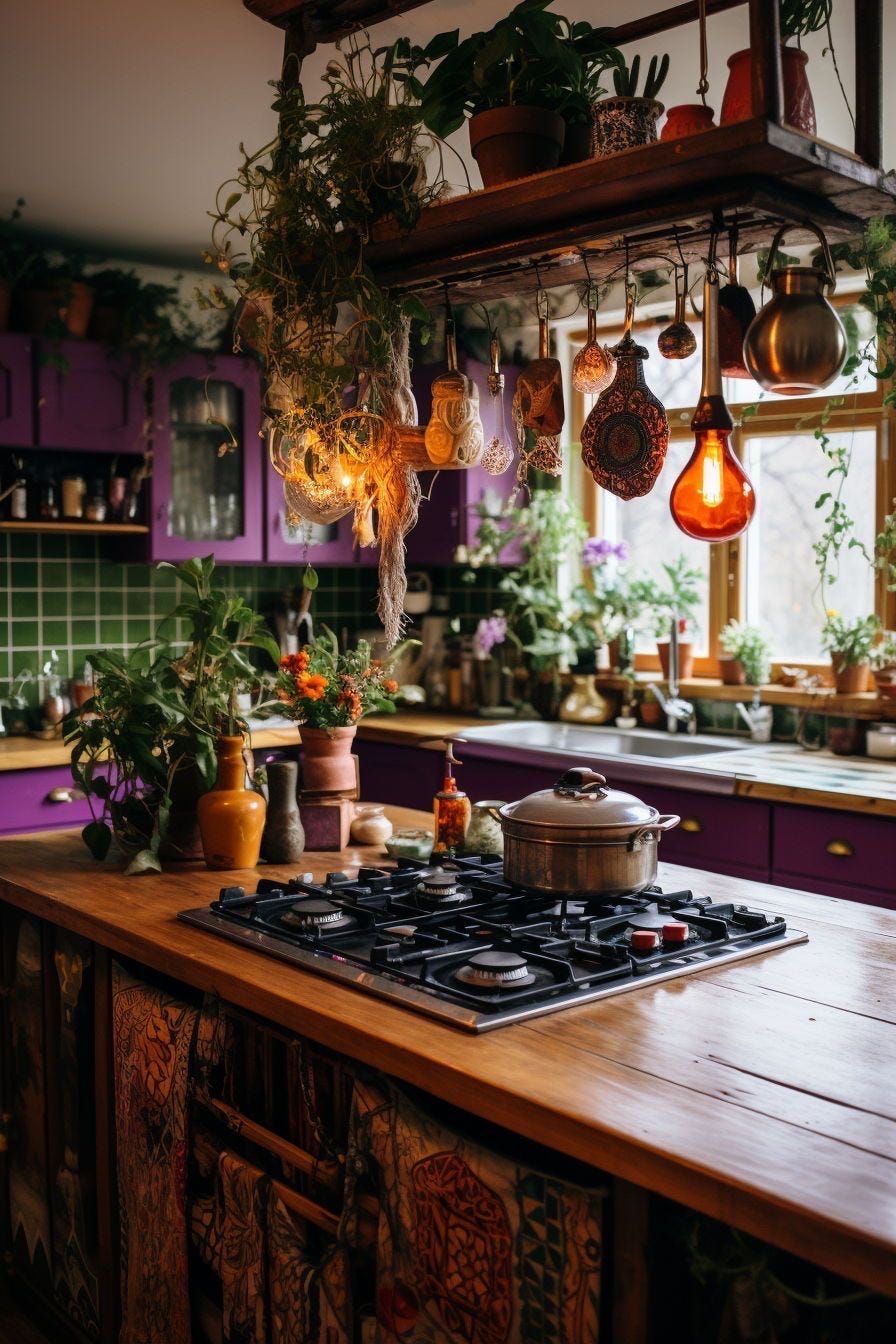
I was thinking the other day about how certain rooms have their own weather. Like, the kitchen is always a little warmer than the rest of the house. Even when it’s cold. Even when the air conditioner is trying to prove a point. The kitchen holds heat like a secret.
Maybe that’s why I’m always drawn to it. Maybe that’s why I feel like I belong there in a way I don’t always belong anywhere else. The stove is like a hearth in a place that doesn’t require a fire. The sink is a small river. The window is a kind of altar.
I used to think magic was supposed to be loud. Big. Bright. Like lightning. Like something that makes people gasp.
But most of the magic I’ve ever seen is quiet.
It’s in the way a plant leans toward the sun even when you forget to water it for a few days. It’s in the way dough puffs up while you’re not looking, like it’s been whispering to itself the whole time. It’s in the way a pot of soup changes color and scent the longer it sits, like it’s thinking about what it wants to become.
I remember the first time I realized I could make something grow just by being consistent.
I was young, and I didn’t know what I was doing. I think I thought plants were just decorative. Like little green ornaments you could set around the house to prove you were a “responsible adult.” I had a tiny basil plant once, and I killed it almost immediately because I didn’t know it needed anything besides a pretty pot.
Then I tried again.
This time I put it by the window and watered it when the soil looked dry. I talked to it, not like I was talking to it, but like I was reminding myself that it was alive. I would tell it small things, like how my day went, or what I was thinking about, or how I was tired in a way I couldn’t explain.
It grew.
Not because I was special. Not because I had some secret talent. It grew because I was paying attention.
That’s the thing about growth. It isn’t a dramatic event. It’s just a series of small decisions that add up.
It’s like cooking. You don’t make a meal in one big dramatic moment. You make it in a hundred small choices. Salt. Heat. Time. The decision to let it simmer a little longer even when you’re impatient.
I think the kitchen is where I learned the kind of patience that feels like rebellion.
Because the world is always trying to hurry us. It wants our bodies to be productive. It wants our time to be measurable. It wants our lives to be efficient.
But some things don’t work like that.
Some things need to take their time. Some things need to be left alone. Some things need to be tended to slowly, with a kind of gentle persistence that doesn’t feel impressive, but feels necessary.
I think that’s why I love cooking so much. It’s a way to practice resisting the rush.
I remember one night, I was making soup. It was one of those nights where you can’t stop thinking about things you can’t change. I had been carrying grief around in my body like it was a heavy coat I couldn’t take off. I was tired in a way that didn’t make sense. I was hungry, but not just for food. Hungry for something that would make me feel like I belonged in my own life.
I chopped vegetables and listened to the sound of the knife on the cutting board. I let the onion sweat in the pan until it became soft and sweet. I added garlic, and the smell made my eyes water in that way that feels almost like laughing.
The soup was simple. Nothing fancy. But I kept stirring it anyway, like I was trying to convince the world that I was still here. Like the act of stirring was a way of saying I’m not gone. I’m still in this body. I still have hands. I still can make something warm.
And the soup did what soup always does. It became something else.
It became comfort. It became a way to hold myself without needing anyone else to do it for me.
That’s when I started to think of myself as… something. Not a witch exactly. Not in the dramatic sense. But a person who could make things come alive.
The first time I felt that power, I was probably 16 or 17. I was in my granddaddy’s kitchen, and he was showing me how to make cornbread. He didn’t measure anything. He just poured and stirred and talked like the food was a friend.
I remember thinking: He knows what he’s doing without needing to prove it.
And I wanted that.
I wanted to know things without needing a manual. I wanted to trust my instincts. I wanted to feel like my hands were capable of shaping something real.
My granny would look at me sometimes and say things like, “You got the touch,” like it was nothing. Like it was just the way I was. I didn’t know then how rare it was to be told that your hands are powerful.
It’s funny how we forget that our bodies are intelligent.
We think intelligence lives only in the brain, but my body knows when something is too salty. My body knows when the soil is too dry. My body knows when a plant is begging for more light, even if my eyes don’t want to admit it.
I think a lot of witchcraft is just remembering that.
Remembering that your body is not a machine. It’s not a tool to be optimized. It’s a living thing that knows things you don’t always know how to say.
I like to think of the kitchen as a place where I can practice listening to my body again.
I like the way the heat feels on my skin when I’m standing by the stove. I like the smell of garlic and butter and something browning just enough to be sweet. I like the way the world quiets down when I’m cooking. Like the kitchen is a little bubble where the rest of life can’t interrupt.
And the plants. The plants are a different kind of quiet. They don’t need you to be dramatic. They don’t need you to perform. They just need you to show up.
I’ve had plants die on me. I’ve had pothos get leggy and sad. I’ve had tomatoes rot because I forgot to check them. But I’ve also had basil explode into life when I was least expecting it. I’ve had seeds sprout after I forgot I even planted them. I’ve had a snack plant survive a season where I didn’t think I could survive myself.
That’s the thing about life. It keeps happening even when you don’t feel like you deserve it.
And maybe that’s the point.
Maybe witchcraft is just the art of noticing that you can still be a part of it. That you can still make something happen. That you can still bring things into being.
Maybe it’s not a spell. Maybe it’s a practice.
A practice of attention. A practice of care. A practice of showing up, again and again, even when you’re tired of trying.
I don’t know if I believe in magic the way people in stories do. But I believe in the way the world responds when you treat it like it matters.
I believe in the way food becomes more than food when you put your love into it. I believe in the way plants grow better when you talk to them like they’re alive. I believe in the way a room feels warmer when you’ve been making something in it.
I believe in the kind of magic that doesn’t announce itself.
The kind that is quiet.
The kind that smells like basil.
The kind that tastes like soup.
The kind that makes you feel like you’re not alone in your body.
gosh, there's so much about the piece to love, kenz--i found it hard to choose just one favourite part. but 'That’s the thing about growth. It isn’t a dramatic event. It’s just a series of small decisions that add up.' is really so sublime!
i, too, have a reluctant relationship with time--in that is dislike it! much of your words on growth, patience, and presence really spoke to me. we also have cooking in common--being in the kitchen brings me so much joy, and i find the process of cooking both therapeutic and a way to show love. your words on your grandparents are truly beautiful. another incredible piece <3